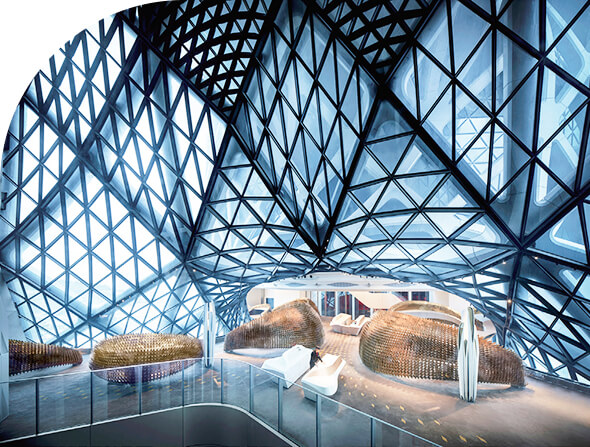
JH-M Metal Cladding Wall adopts high-precision all-aluminum alloy keel with excellent corrosion resistance, making it particularly suitable for coastal and other highly corrosive environments. The system achieves high flatness for large-size panels and is equipped with a high load-bearing structural installation system, ensuring safety while enabling convenient modular installation, providing a reliable and high-quality solution for modern building façades.
Curtain wall panels must be coordinated with the supporting frame, joints, waterproofing and surrounding facade systems rather than treated as independent decorative elements.
JANGHO considers key engineering factors including:
● Panel dimensions and thickness
● Wind pressure and structural loading
● Supporting frame and fixing points
● Thermal expansion and panel movement
● Joint width and sealing details
● Drainage and waterproofing
● Surface flatness and fabrication tolerances
● Interfaces with glazing and other facade systems
For large-scale or complex buildings, panel modules can be coordinated with the overall facade grid to improve visual consistency and installation efficiency.
Architectural Finishes for Metal Facade Panels
Surface finish plays an important role in the appearance, durability and long-term performance of curtain wall panels.
Depending on project requirements, architectural metal panels can be developed with finishes such as:
● Fluorocarbon coating
● Powder coating
● Anodized aluminum finish
● Metallic finishes
● Brushed or textured surfaces
● Project-specific colors and visual effects
Finish selection should consider UV exposure, corrosion conditions, cleaning requirements and the intended architectural appearance.
Performance of Curtain Wall Panels
A high-performance curtain wall panel system must provide more than architectural appearance. Panel design should account for structural stability, weather exposure and long-term dimensional movement.
Key performance considerations include:
● Wind Resistance – panel thickness, stiffeners and supporting frames can be engineered according to design wind pressure.
● Water Management – panel joints, flashings and drainage paths help manage rainwater at the facade surface.
● Thermal Movement – fixing details should allow for expansion and contraction caused by temperature changes.
● Corrosion Resistance – material and coating selection should reflect local climate and environmental exposure.
● Panel Flatness – fabrication and reinforcement details help control oil canning and visible deformation across large panels.
Large-Format and Complex Curtain Wall Panels
Modern facade designs increasingly use large panels, curved surfaces and non-standard geometries to create distinctive architectural forms.
For these projects, JANGHO can coordinate panel subdivision, reinforcement, fabrication tolerances and supporting structures according to the architectural geometry and installation conditions.
Engineering considerations can include:
● Large-format panel deformation
● Curved and folded panel geometry
● Hidden fixing systems
● Module alignment
● Edge reinforcement
● Transportation and lifting limitations
● Installation tolerances
This allows metal cladding to be integrated into complex facade geometries while maintaining consistent joints and surface quality.
Manufacturing and Quality Control
Accurate fabrication is essential for maintaining consistent panel joints and facade alignment across large building elevations.
JANGHO applies digital production and quality-control processes throughout fabrication, inspection and logistics. Panel dimensions, surface quality, fixing components and assembly details can be inspected according to project requirements before delivery.
For large facade projects, controlled fabrication tolerances help maintain consistent modules and reduce installation adjustment on site.