



+86 20 8269 2588



Jun. 17, 2026
As architectural design continues to evolve, curtain wall systems have become a key component of modern building envelopes. From commercial office towers and luxury hotels to airports and mixed-use developments, selecting the appropriate curtain wall system is essential for achieving aesthetic goals, structural performance, energy efficiency, and long-term durability.
As a professional curtain wall manufacturer and facade engineering company, we provide customized curtain wall solutions tailored to different project requirements. Understanding the various curtain wall system types can help architects, developers, and contractors make informed decisions during the design and construction process.
A curtain wall system is a non-load-bearing exterior facade attached to a building's structural frame. It serves as an exterior envelope system that protects the building from wind, rain, temperature fluctuations, and other environmental factors while enhancing appearance and energy performance.
Modern curtain wall systems typically incorporate aluminum framing, glass panels, insulation materials, sealants, and specialized hardware to create a high-performance building facade.
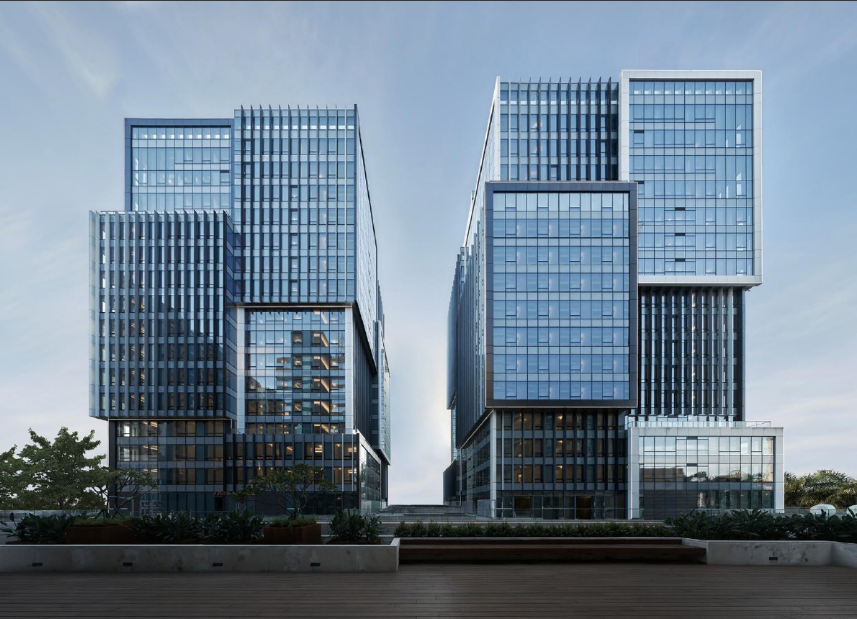
The Unitized Curtain Wall System is one of the most widely used facade solutions for high-rise buildings.
In this system, curtain wall panels are prefabricated and fully assembled in a factory before being transported to the construction site for installation.
Faster installation speed
Improved quality control
Reduced on-site labor
Better weather resistance
Suitable for high-rise projects
Office towers
Hotels
Airports
Commercial complexes
Because fabrication occurs under controlled factory conditions, unitized systems offer excellent consistency and project efficiency.
The Stick Curtain Wall System is assembled on-site using individual mullions, transoms, and glazing components.
This traditional facade solution remains popular for low-rise and mid-rise projects.
Lower initial investment
Flexible design modifications
Easier transportation logistics
Cost-effective for smaller buildings
Educational facilities
Residential projects
Mid-rise commercial buildings
For projects with complex installation conditions or smaller facade areas, stick systems often provide a practical solution.
Structural glazing systems utilize high-performance structural silicone to bond glass panels directly to the framing system, minimizing visible aluminum components.
Modern all-glass appearance
Increased natural daylight
Clean architectural aesthetics
Enhanced building value
Corporate headquarters
Luxury hotels
Landmark buildings
Premium retail developments
This system is frequently selected when architects seek a sleek and contemporary facade design.
The Semi-Unitized Curtain Wall System combines elements of both stick-built and unitized construction.
Certain components are pre-assembled in the factory while final assembly is completed on-site.
Faster installation than stick systems
More flexibility than fully unitized systems
Improved project scheduling
Reduced transportation costs
This approach is often used when balancing cost control with construction efficiency.
A Double Skin Curtain Wall consists of two layers of facade separated by an air cavity.
Superior thermal insulation
Improved acoustic performance
Reduced energy consumption
Enhanced indoor comfort
Green buildings
Sustainable office towers
High-performance commercial buildings
As sustainability requirements continue to increase, double-skin facades are becoming more popular in energy-efficient building design.
Selecting the most suitable curtain wall solution depends on several factors:
High-rise buildings typically benefit from unitized curtain wall systems due to installation efficiency and structural performance.
Complex facade geometries may require customized architectural curtain wall systems.
Stick systems may offer lower upfront costs, while unitized systems can reduce overall project timelines.
Double-skin facades and high-performance glazing systems help achieve sustainability objectives.
Prefabricated systems often accelerate project completion.
Every project presents unique design challenges. Our engineering team specializes in curtain wall structural design, curtain wall facade design, and bespoke curtain wall systems developed to meet specific architectural and performance requirements.
From concept development and engineering analysis to fabrication and installation support, we provide comprehensive curtain wall system solutions for projects worldwide.
Understanding different curtain wall system types is essential for selecting the right facade solution. Whether a project requires a unitized curtain wall system for a skyscraper, a structural glazing facade for a landmark building, or a customized architectural curtain wall system for a unique development, choosing the appropriate system directly impacts project performance, aesthetics, and lifecycle value.
As an experienced curtain wall company and facade specialist, we are committed to delivering innovative, durable, and energy-efficient curtain wall solutions that help bring modern architectural visions to life.
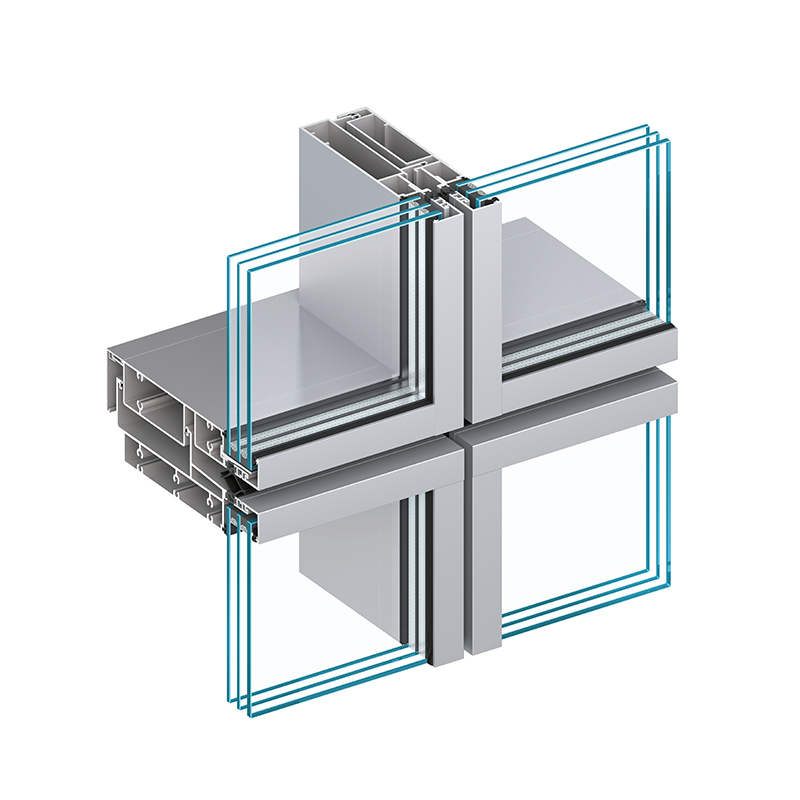
Unitized Curtain Wall System
The Unitized Curtain Wall System is one of the most widely used facade solutions for high-rise buildings.
In this system, curtain wall panels are prefabricated and fully assembled in a factory before being transported to the construction site for installation.
Reltaed Products
JH-U Unitized Curtain Wall (Exposed Framing)
Product Type: JH-U Unitized Curtain Wall (Exposed Framing)
Mullion width: 65/80/100 mm
Glass Thickness: 6-54 mm
Thermal Performance: For the JH-U80 model, the unit width is 1,800 mm, the unit height is 4,400 mm, and the inter-floor height is 1,100 mm.
Glass thermal transmittance (Ug) is 0.8 W/(m²·K), corresponding to the system thermal transmittance (Uw) of 1.3 W/(m²·K).
Air Permeability Performance: EN 12152/12153, Class A4; ASTM E283, compliant; GB/T 15227, Class 4
Static Watertightness Performance: BS EN 12154/12155, RE 1000; ASTM E331, 1000Pa, Compliant
Dynamic Watertightness Performance: BS EN 13050, 500Pa/1500Pa; AAMA 501.5, Compliant; GB/T 15227, Class 5
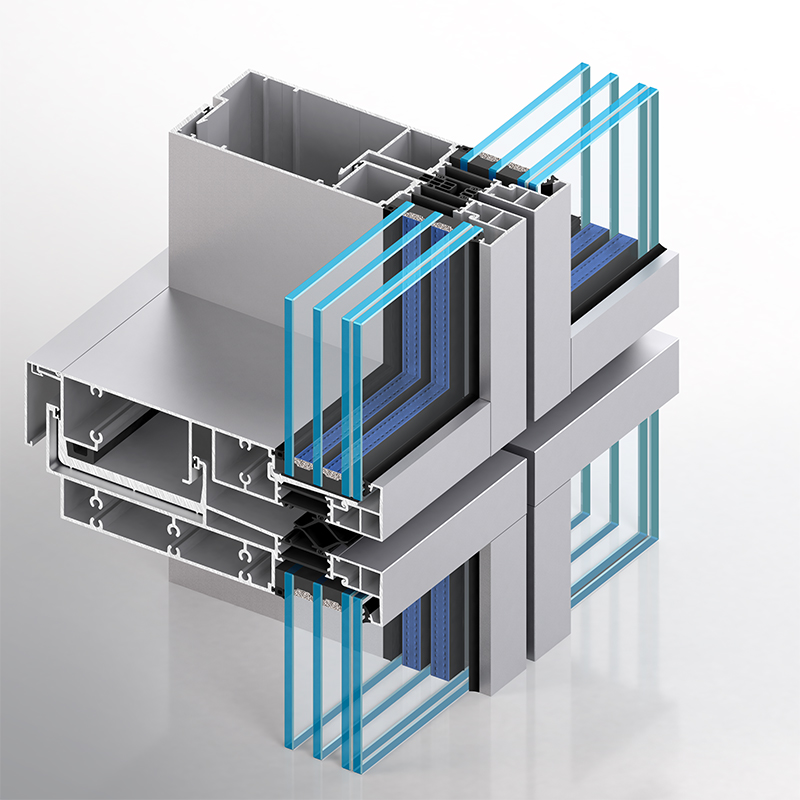
JH-U Unitized Curtain Wall (Exposed Framing - High Thermal Performance)
Product Type: JH-U Unitized Curtain Wall (Exposed Framing - High Thermal Performance)
Mullion Width: 80/100 mm
Glass Thickness: 30-70 mm
Thermal Performance: For the JH-U80 model, the unit width is 1,800 mm, the unit height is 4,400 mm, and the inter-floor height is 1,100 mm. Glass thermal transmittance (Ug) is 0.7 W/(m²·K), corresponding to the system thermal transmittance (Uw) of 1.0 W/(m²·K).
Air Permeability Performance: EN 12152/12153, Class A4; ASTM E283, Compliant; GB/T 15227, Class 4
Static Watertightness Performance: BS EN 12154/12155, RE 1000; ASTM E331, 1000Pa, Compliant
Dynamic Watertightness Performance: BS EN 13050, 500Pa/1500 Pa; AAMA 501.5, Compliant; GB/T 15227,Class 5

